



The 2026/27 tax year brings in a number of important changes that will affect how business owners pay tax, take money out of their company, and stay compliant with HMRC.
Some of these have been announced before, but April 2026 is when they actually come into force. Here are the key changes, explained in a straightforward way.
-
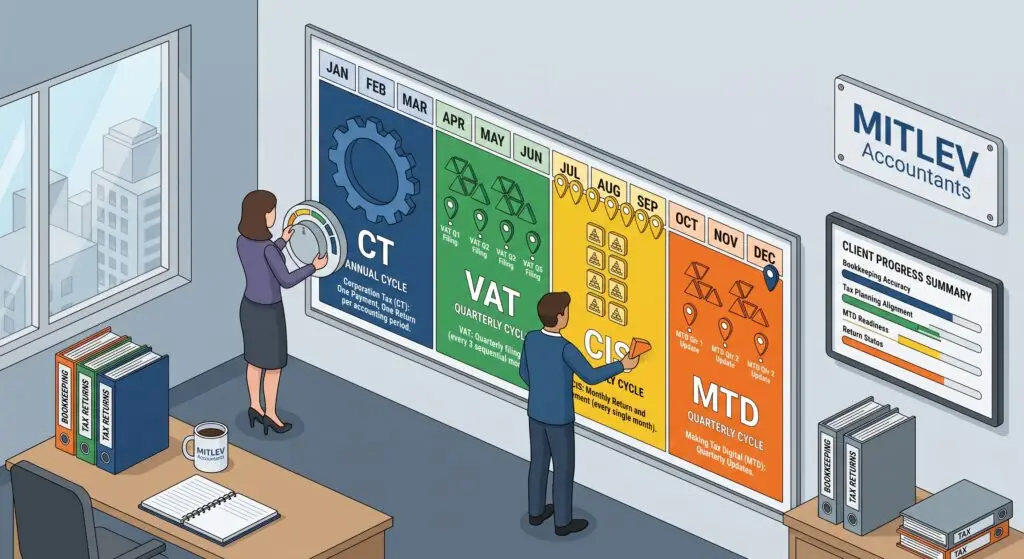
Making Tax Digital for Income Tax Starts
From April 2026, Making Tax Digital (MTD) becomes compulsory for:
- Self-employed individuals
- Landlords with income over £50,000 (before expenses)
Instead of one tax return a year, you will need to:
- Keep digital records
- Submit updates every quarter
- File a final year-end return
This is a big shift and will affect how you manage your bookkeeping day to day.
How MITLEV Accountants can help: We can set up the right systems, handle submissions, and make sure everything runs smoothly so you don’t fall behind.
-
Higher Tax on Dividends
Dividend tax rates are increasing by 2%:
- Basic rate: 10.75%
- Higher rate: 35.75%
With the dividend allowance still only £500, this means many directors will pay more tax when taking money out of their company.
It may now be worth reviewing how you pay yourself between salary and dividends.
-
Selling a Business Will Cost More in Tax
Business Asset Disposal Relief (BADR) is becoming less generous.
From April 2026:
- The tax rate increases to 18%
- The £1 million lifetime limit stays the same
In simple terms, if you sell your business, you will likely pay more tax than you would have a few years ago.
Planning ahead is now more important than ever.
-
Big Changes to Inheritance Tax for Business Owners
Inheritance Tax relief on business and agricultural assets is being restricted.
From April 2026:
- Full (100%) relief is capped at £2.5 million per person
- Anything above that gets only 50% relief
- This effectively creates a 20% tax charge on the excess
Couples can combine allowances up to £5 million, but many business owners will still be affected.
This makes estate planning much more important.
How MITLEV Accountants can help: We can review your structure, work alongside your solicitor, and help ensure your business and personal assets are protected as much as possible.
-
Incorporation Relief Now Needs to Be Claimed
If you move from being self-employed to running a limited company, there is usually a tax relief available to avoid immediate capital gains tax.
From April 2026:
- This relief will no longer be automatic
- It must be actively claimed on your tax return
Missing this could lead to an unexpected tax bill, so it’s important to get it right.
-
Employment Costs Are Increasing Again
National Minimum Wage rates are rising again from April 2026.
This will increase staffing costs, particularly for:
- Retail businesses
- Hospitality
- Service-based businesses
It may be worth reviewing pricing and staffing plans to absorb the impact.
-
Working From Home Allowance Removed
The simple £6 per week working from home allowance is being scrapped.
This means:
- Employees can no longer claim this flat deduction
- Any future claims will need proper evidence
For most people, this just means a small increase in taxable income.
-
Business Rates Changes
New rateable values come into effect from April 2026.
For England and Wales:
- Lower rates apply to smaller retail, hospitality, and leisure properties
- Higher-value properties may see increased costs
In Scotland:
- Rates are also being adjusted, with some relief available (but capped)
The impact depends on your property, so it’s worth checking your new valuation.
How MITLEV Accountants can help: We can review the financial impact of these changes on your business and help you plan ahead, rather than reacting after costs increase.
Final Thoughts
These changes may seem small on their own, but together they can have a noticeable impact on:
- Your tax bill
- Your cash flow
- Your long-term planning
Getting ahead of them now can save both time and money later.
If you want clear, practical advice tailored to your situation, MITLEV Accountants are here to help you stay compliant and tax efficient going into the new tax year.